Planning a desert safari in the UAE? The first question that pops into your head is probably: “What on earth do I wear?”
Should you pack shorts or long trousers? Trainers or sandals? Will it get cold when the sun goes down?
Here is the simple answer: wear lightweight, breathable clothing made from cotton or linen in light colours like beige, white, or cream. Pair this with comfortable closed-toe shoes for activities and bring a light jacket for the evening. This combination keeps you cool during the day, protected from sand, and warm when temperatures drop after sunset.
But there is much more to getting your desert safari outfit right. This guide walks you through everything—from what women and men should wear, to seasonal tips, activity-specific clothing, and the mistakes you absolutely must avoid.
Let us make sure your outfit helps you enjoy every moment of your UAE desert adventure.
Why Your Desert Safari Outfit Matters
The desert is not like the city. It changes fast and can catch you off guard.
During the day, the sun beats down hard. The sand gets hot enough to burn your feet. Then, as evening arrives, the temperature drops quickly. Add blowing sand during dune bashing, and suddenly your outfit choice becomes very important.
Fact: Desert temperatures in Dubai can reach 50°C during summer months and drop to 12°C at night during winter—a swing of nearly 40 degrees in a single day.
Your clothing needs to do three things at once:
-
-
Keep you comfortable in extreme heat
-
Protect you from the sun, sand, and activities
-
Respect local culture in the UAE
-
Get this right, and you will enjoy dune bashing, camel rides, quad biking, and BBQ dinners without worrying about sweat, sunburn, or shivers.
Get it wrong, and you might spend your safari feeling sticky, uncomfortable, or even getting sunburnt.
Fact: The UAE receives approximately 3,500 hours of sunshine per year, making sun protection essential for any outdoor desert activity.
Desert Safari Dress Code: Essential Rules
Before we dive into specific outfits, let us cover the golden rules that apply to everyone.
Best Fabrics for Desert Safari
The fabric you choose makes a huge difference in how comfortable you feel.
|
Fabric |
Why It Works |
|
Cotton |
Breathable, absorbs moisture, keeps skin cool |
|
Linen |
Lightweight, regulates temperature, dries quickly |
|
Moisture-wicking sportswear |
Pulls sweat away from skin during activities |
Fabrics to Avoid:
|
Fabric |
Why Avoid It |
|
Polyester |
Traps heat, sticks to sweaty skin |
|
Heavy denim |
Too thick, restricts movement, takes ages to dry |
|
Wool |
Far too warm for desert conditions |
|
Silk |
Impractical for sandy, active environments |
Natural fabrics let air flow through and help your body stay cool. Synthetic materials trap heat and make you feel like you are wrapped in cling film.
Colour Selection for Desert Heat
Colour choice is not just about looking good in photos—it actually affects how hot you feel.
Best colours: Beige, white, cream, khaki, light grey, and pastel shades. These colours reflect sunlight and keep you cooler.
Colours to avoid: Black, navy, and dark colours absorb heat and make you feel much hotter.
Fact: Light-coloured clothing can be up to 11°C cooler than dark-coloured clothing in direct sunlight due to heat reflection properties.
Cultural Considerations in the UAE
The UAE is a Muslim country that values modesty. While desert safari camps are tourist-friendly places with relaxed dress codes, showing respect for local customs is always appreciated.
You do not need to cover from head to toe, but avoiding very short shorts, low-cut tops, or revealing clothing is a good idea. Think of it as smart-casual with coverage.
Desert Safari Outfit for Women: Complete Guide
Women have the most outfit options for a desert safari—but also the most questions. Let us break it down simply.
Best Clothing Options for Women
Tops:
-
-
Long-sleeved cotton blouses
-
Loose tunics and kaftans
-
Breathable linen shirts
-
Flowy t-shirts
-
Long sleeves might seem counterintuitive in the heat, but they actually protect you from sunburn and keep you cooler than exposed skin under the harsh desert sun.
Bottoms:
-
-
Maxi skirts (ankle-length)
-
Wide-leg palazzo pants
-
Culottes
-
Harem pants
-
Lightweight leggings with a long top
-
Loose-fitting bottoms allow air to circulate and prevent the sticky, sweaty feeling that tight clothes cause.
Dresses:
-
-
Flowy maxi dresses
-
Cotton shirt dresses
-
Linen jumpsuits
-
Maxi dresses are brilliant for desert safaris—they look stunning in photos, keep you modest, and feel incredibly comfortable. Just avoid them during quad biking or sandboarding, where loose fabric can be a safety issue.
Complete Outfit Ideas for Women
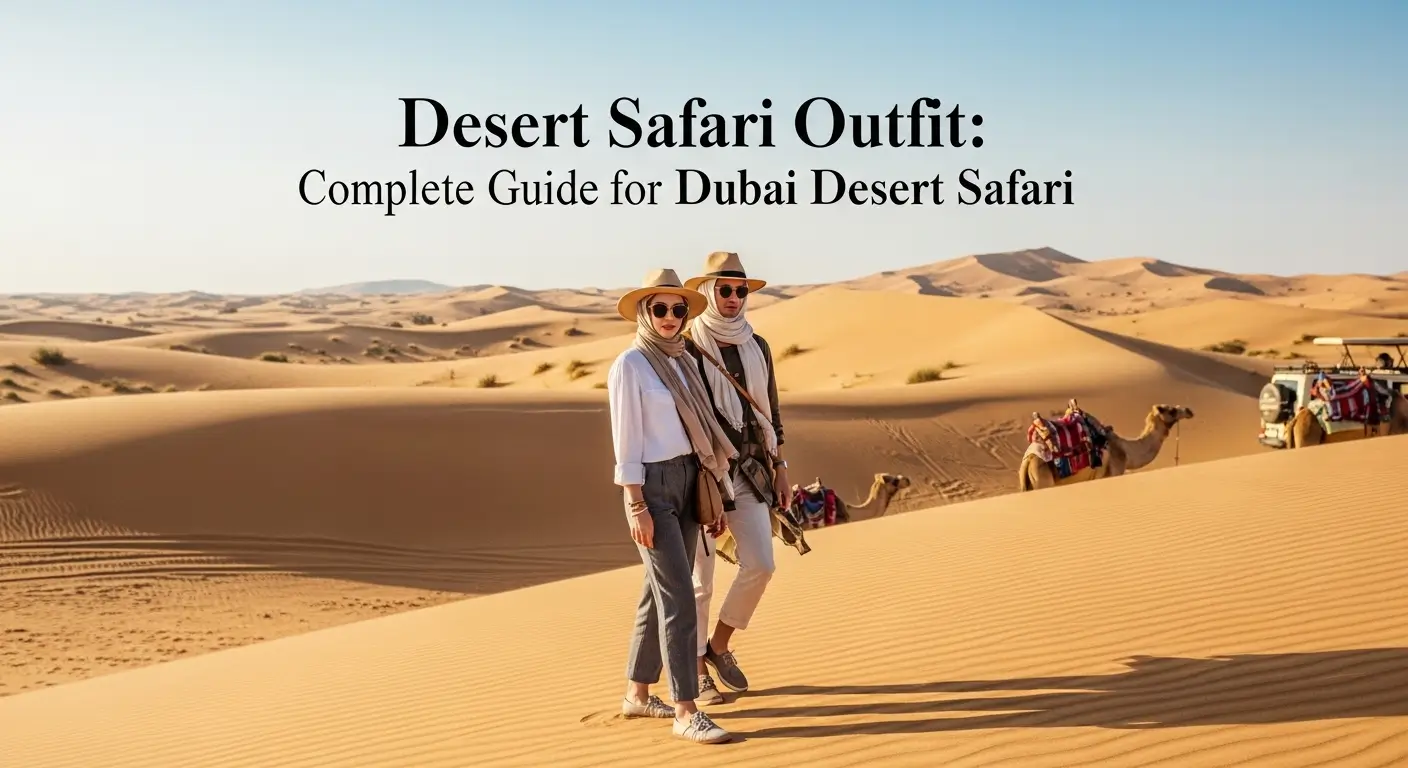
Classic Safari Look: Linen shirt tucked into wide-leg trousers, paired with trainers and a wide-brimmed hat. Add a light scarf for evening.
Effortless Chic: Flowy maxi dress in earthy tones with a cardigan tied around your waist for later. Comfortable sandals for camp time.
Active Explorer: Moisture-wicking top with culottes and sturdy closed-toe shoes. Baseball cap and sunglasses for sun protection.
Modesty Guidelines for Women in UAE
While no strict dress code exists for desert safaris, these guidelines help you feel comfortable and show cultural respect:
-
-
Shoulders covered is recommended
-
Knee-length or longer bottoms
-
Avoid very low-cut necklines
-
A scarf or pashmina works brilliantly for coverage when needed
-
Fact: Desert safari camps are private tourist facilities, so dress codes are more relaxed than public spaces in UAE cities. However, modest clothing is always appreciated.
Desert Safari Outfit for Men: Complete Guide
Men have it slightly easier—fewer choices, but still important to get right.
Best Clothing Options for Men
Tops:
-
-
Cotton or linen button-down shirts
-
Breathable polo shirts
-
Moisture-wicking t-shirts
-
Long-sleeved cotton shirts for sun protection
-
Bottoms:
-
-
Lightweight chinos
-
Cargo trousers (practical pockets for phone, sunscreen)
-
Convertible trousers (zip off to shorts)
-
Breathable joggers
-
Complete Outfit Ideas for Men
Classic Desert Look: Linen button-down shirt in light blue or white, khaki chinos, desert boots or trainers, and a fedora or cap.
Adventure Ready: Moisture-wicking polo shirt, cargo trousers with zip pockets, sturdy trainers, and a baseball cap. Perfect for dune bashing and quad biking.
Evening Cool: Cotton button-down shirt, lightweight trousers, comfortable loafers, and a scarf or shemagh for that authentic Arabian touch.
Traditional Emirati Option for Men
Want to try something different? Many visitors enjoy wearing a kandura—the traditional white ankle-length robe worn by Emirati men. It is surprisingly practical for desert conditions, keeping you cool while offering complete sun protection.
Some desert camps offer kandura rentals for photography—a wonderful way to capture an authentic Arabian memory.
What to Wear by Time of Day
Different safari timings require different outfit approaches. The desert can feel like two completely different places depending on when you visit.
Morning Desert Safari Outfit (6 AM – 10 AM)
Morning safaris start cool and heat up rapidly as the sun rises.
What to wear:
-
-
Start with a hoodie or light jacket over a t-shirt
-
Long trousers or comfortable shorts
-
Closed-toe trainers (mandatory for activities)
-
Sunglasses and cap
-
Layering tip: You will peel off layers as the morning progresses, so wear pieces that are easy to remove and carry.
Fact: Morning desert temperatures in Dubai range from 18°C at sunrise to above 35°C by mid-morning during summer months.
Evening Desert Safari Outfit (3 PM – 9 PM)
Evening safaris are the most popular option. They start warm and cool down after sunset.
What to wear:
-
-
Light, breathable clothing for the first half
-
A cardigan, pashmina, or light jacket for after dark
-
Comfortable attire for floor seating during BBQ dinner
-
Trainers for activities, sandals acceptable at camp
-
Important: Even in the summer months from June to August, temperatures can drop to around 30°C at night. In winter months from October to February, evenings get properly cold—carry a warm layer.
Overnight Desert Safari Outfit
Spending the night under the stars requires proper planning.
What to bring:
-
-
Daytime outfit (as above)
-
Warm sleepwear for cold nights
-
Fleece jacket or hoodie
-
Extra socks for warmth
-
Change of clothes for the morning
-
Fact: Desert temperatures can drop 15-20°C from daytime highs after sunset, making warm layers essential for overnight stays.
Seasonal Outfit Guide: Summer vs Winter
The UAE has two distinct seasons that require different outfit strategies.
Summer Desert Safari Outfit (April – September)
Summer in the UAE is intense. Temperatures regularly exceed 40°C, and humidity can make the air feel thick and heavy.
Clothing priorities:
-
-
Lightest possible fabrics (cotton and linen only)
-
Maximum coverage for sun protection (long sleeves are actually cooler than exposed skin)
-
Light colours exclusively
-
Wide-brimmed hat is essential, not optional
-
SPF 50+ sunscreen applied liberally and regularly
-
Fact: Humidity levels in the UAE desert can reach 93% during summer months, making breathable fabrics critical for comfort.
Summer outfit example: Loose cotton long-sleeved shirt in white or cream, breathable linen trousers, trainers with cotton socks, wide-brimmed hat, and quality sunglasses.
Winter Desert Safari Outfit (October – March)
Winter is the most popular time for desert safaris. Daytime temperatures are pleasant, but evenings get genuinely cold.
Clothing priorities:
-
-
Layering system is essential
-
Light jacket, cardigan, or fleece for evenings
-
Closed-toe shoes with socks
-
Scarf or shawl for warmth and wind protection
-
Long trousers preferred over shorts
-
Fact: Winter months from November to February are the peak tourist season for desert safaris due to pleasant daytime temperatures averaging 24°C.
Winter outfit example: Cotton long-sleeved shirt, comfortable trousers, hoodie or fleece jacket, trainers with socks, and a scarf. Layer up so you can adjust as temperatures change throughout your safari.
Activity-Specific Outfit Guide
Each desert safari activity has different clothing requirements. Here is what works best for each experience.
Outfit for Dune Bashing
Dune bashing is an exhilarating 4×4 ride over steep sand dunes. Your vehicle will tilt, turn, and bounce—your outfit needs to stay secure.
What to wear:
-
-
Secure, non-restrictive clothing
-
Long trousers (your thighs may touch hot seats)
-
Closed-toe shoes with a good grip
-
Sunglasses with a secure strap (they fly off otherwise)
-
What to avoid:
-
-
Loose scarves (safety hazard)
-
Very loose tops (ride up during bumpy sections)
-
Flip-flops (will fly off your feet)
-
Outfit for Camel Riding
Camel riding is a peaceful experience, but the saddle can cause discomfort if you are not dressed right.
What to wear:
-
-
Long trousers or leggings (essential for saddle friction)
-
Comfortable top for seated position
-
Sturdy footwear that will not slip off
-
Hat and scarf for sun protection
-
What to avoid:
-
-
Short skirts or dresses (hard to balance, uncomfortable)
-
Shorts (saddle friction on bare skin)
-
High heels or loose sandals
-
Outfit for Quad Biking and Buggy Rides
Quad biking involves speed, sand spray, and engine heat. Your outfit needs to protect you.
What to wear:
-
-
Long trousers (mandatory—the engine gets hot)
-
Long sleeves recommended
-
Closed-toe shoes required
-
Secure eyewear
-
Gloves are optional but useful for grip
-
What to avoid:
-
-
Shorts (engine heat can burn bare legs)
-
Loose flowing clothes (safety hazard near wheels)
-
Open-toe shoes
-
Outfit for Sandboarding
Sandboarding is like snowboarding but on dunes. Falls are common, so dress for protection.
What to wear:
-
-
Athletic wear with flexibility
-
Long trousers (protect from sand abrasion)
-
Closed-toe shoes with ankle support
-
Secure sunglasses
-
What to avoid:
-
-
Short sleeves (sand scrapes hurt)
-
Loose or flowy clothing (catches wind, trips you up)
-
Skirts or dresses
-
Outfit for BBQ Dinner and Entertainment
After the active part of your safari, you will relax at camp for dinner and entertainment like belly dancing shows, henna painting, and falcon displays.
What to wear:
-
-
Casual but comfortable attire
-
Clothing suitable for floor seating
-
Light layer for evening chill
-
Sandals are acceptable at camp
-
Fresh shirt if you sweated through activities
-
The BBQ dinner is relaxed and informal—no need to dress up, just be comfortable.
Desert Safari Footwear Guide
Your shoes can make or break your desert experience. Choose wisely.
Best Shoes for Desert Safari
|
Footwear Type |
Pros |
Cons |
Best For |
|
Trainers/Sneakers |
Great grip, comfortable, protective |
Sand gets inside |
All activities |
|
Hiking Shoes |
Ankle support, durable, excellent grip |
Can be heavy and hot |
Active adventures |
|
Desert Boots |
Breathable, stylish, protective |
May be warm in summer |
Photography, walking |
|
Sturdy Sandals |
Breathable, easy on/off |
Less protection |
Camp area only |
Fact: Desert sand temperatures can reach 60°C in summer—hot enough to cause burns on unprotected feet within seconds.
Footwear to Avoid
- Flip-flops: Sand gets between your toes constantly, they offer no protection, and they slip off during activities. Leave them at the hotel.
- High heels: Impossible to walk in sand. You will sink with every step and risk injury. Not practical in any way.
- New shoes: Never wear brand new shoes on a desert safari. You will get blisters from all the walking. Wear shoes that are already broken in.
- Slippery-soled shoes: Dunes require grip. Smooth-soled dress shoes will have you sliding all over the place.
Must-Have Accessories for Desert Safari
The right accessories complete your outfit and make your safari more comfortable.
Sun Protection Accessories
- Wide-brimmed hat: Protects your face, ears, and neck from the sun. A baseball cap works too but offers less coverage.
- UV-protected sunglasses: The desert glare is intense. Quality sunglasses with UV protection are essential, not optional.
- Shemagh or keffiyeh: The traditional Arabian scarf is incredibly versatile. Use it for sun protection, sand protection, warmth in the evening, or simply as a stylish accessory.
Skincare Essentials
- Sunscreen SPF 30-50+: Apply generously before you leave and reapply every two hours. The desert sun is unforgiving.
- Lip balm with SPF: Desert air is extremely dry and will crack your lips quickly. SPF lip balm protects from both dryness and sun damage.
- Moisturiser: The desert air saps moisture from your skin. A light moisturiser helps keep your skin comfortable.
Practical Accessories
- Crossbody bag or waist bag: Keeps your essentials close while leaving your hands free for activities. Much better than a handbag.
- Light backpack: For overnight safaris, a small backpack carries everything you need.
- Scarf or pashmina: Multi-purpose—use for warmth, sun protection, sand protection, or modesty coverage.
- Wet wipes and tissues: Sand and dust get everywhere. Wet wipes are perfect for freshening up before dinner.
- Water bottle: Staying hydrated in the desert is crucial. Bring your own bottle even if water is provided.
What NOT to Bring
-
-
Expensive jewellery: Sand can damage it, and you might lose it
-
Heavy perfume: Strong scents attract insects
-
Large bulky bags: Impractical for activities
-
Fragile items: The bumpy rides can break them
-
What NOT to Wear on a Desert Safari
Sometimes knowing what to avoid is just as important as knowing what to wear.
Clothing to Avoid
|
Item |
Why Avoid |
|
Heavy jeans |
Trap heat, uncomfortable, restrict movement |
|
Dark colours |
Absorb heat, make you much hotter |
|
Tight clothing |
Restricts airflow, causes sweating and chafing |
|
Short skirts or dresses |
Impractical for camel riding, cultural consideration |
|
Very revealing tops |
Cultural insensitivity, increased sun exposure |
|
Synthetic fabrics |
Trap heat, cause discomfort |
|
Expensive or delicate clothing |
Sand and dust will damage them |
Footwear to Avoid
-
-
Flip-flops: Sand irritation, no protection, slip off constantly
-
High heels: Impossible in sand, safety hazard
-
Brand new shoes: Blister risk during extended walking
-
Smooth-soled shoes: No grip on dunes
-
Accessories to Avoid
-
-
Heavy makeup: Melts in the heat and mixes with sand
-
Expensive jewellery: Risk of damage or loss
-
Loose dangling accessories: Safety hazard during activities
-
Strong fragrances: Attract insects
-
Desert Safari Outfit for Kids
Travelling with children? Kids need extra consideration for their desert outfits.
Clothing Recommendations for Children
-
-
Lightweight cotton clothing
-
Long sleeves and long trousers for sun protection
-
Hat with a chin strap (prevents it from blowing away)
-
Comfortable closed-toe shoes that they can walk and run in
-
Special Considerations for Kids
- Extra sun protection: Children’s skin is more sensitive than adults’. Apply SPF 50+ sunscreen frequently.
- Layers for temperature changes: Kids feel temperature changes more intensely. Bring warm layers for the evening.
- Spare change of clothes: Children get sandy and messy. Pack extras.
- Comfort for sleeping: If doing an overnight safari, pack familiar sleepwear and warm layers.
- Fact: Children under 12 are more susceptible to heat-related illness and sunburn—dermatologists recommend SPF 50+ sunscreen reapplied every 90 minutes for desert activities.
Traditional Emirati Clothing Options
Want to add a cultural experience to your desert safari? Consider wearing traditional Emirati clothing.
For Men
- Kandura (also called Kandurah): The white ankle-length robe worn by Emirati men. It is actually brilliantly designed for desert conditions—loose, breathable, and offers complete sun protection.
- Ghutra: The white headdress worn with the kandura. It protects the head and face from sun and sand.
- For Women
- Abaya: The black cloak worn over regular clothing. Many women wear colourful clothes underneath.
- Sheila: The black headscarf often worn with the abaya.
- Jalaabiya or Kaftan: A colourful, loose gown that is more relaxed than the abaya. Perfect for camp settings and photographs.
- Note: Many desert safari camps offer traditional clothing rentals specifically for photography. It is a wonderful way to capture authentic Arabian memories without purchasing expensive garments.
Outfit Ideas That Look Amazing in Photos
Let us be honest—you want photos that look incredible. The desert is one of the most photogenic places on earth. Here is how to dress for stunning shots.
Best Colours for Desert Photos
High contrast colours: Red, burgundy, cobalt blue, emerald green. These pop beautifully against the golden sand.
Earthy harmony: Burnt orange, terracotta, olive green. These complement the desert tones.
Classic elegance: White, cream, and camel tones. Timeless and sophisticated.
Colours to avoid for photos: Beige and tan blend into the sand and make you disappear in photos. Busy patterns also photograph poorly.
Style Tips for Photogenic Outfits
-
-
Flowing fabrics create movement: Maxi dresses, loose scarves, and wide-leg trousers look dynamic in the breeze
-
Solid colours photograph better than patterns
-
Coordinated outfits for couples and families: Matching colour schemes look stunning in group shots
-
Golden hour is your friend: Sunset light makes everything look magical
-
Desert Safari Outfit Packing Checklist
Before you head out, use this checklist to make sure you have everything.
Clothing
-
-
Breathable top (cotton or linen)
-
Long trousers or comfortable bottoms
-
Light jacket, cardigan, or hoodie
-
Extra layer for evening (scarf or pashmina)
-
Change of shirt (for after activities)
-
Footwear
-
-
Closed-toe trainers or shoes for activities
-
Sandals for camp (optional)
-
Cotton socks
-
Accessories
-
-
Wide-brimmed hat or cap
-
UV-protected sunglasses
-
Scarf or shemagh
-
Small crossbody bag or waist bag
-
Essentials
-
-
Sunscreen SPF 30-50+
-
Lip balm with SPF
-
Wet wipes and tissues
-
Water bottle
-
Camera or phone
-
Power bank
-
Frequently Asked Questions
Can I wear shorts on a desert safari?
Yes, knee-length shorts are acceptable. However, long lightweight trousers are better for sun protection, saddle friction during camel rides, and engine heat during quad biking. If you wear shorts, apply plenty of sunscreen to your legs.
Is there a strict dress code for the desert safari in Dubai?
No strict dress code exists for desert safaris. Camps are tourist-friendly with relaxed rules. However, modest clothing that covers shoulders and knees shows cultural respect and is always appreciated in the UAE.
What should I wear for an evening desert safari?
Start with light, breathable clothing for the warm afternoon. Bring a jacket, cardigan, or pashmina for after sunset when temperatures drop. Wear comfortable clothes suitable for floor seating during the BBQ dinner.
Do I need to cover my head in the desert?
Not mandatory, but highly recommended for practical reasons. A hat, cap, or scarf protects you from sunburn and shields your face from blowing sand. Your future self will thank you.
Can I wear flip-flops to a desert safari?
Not recommended for activities. Sand gets inside constantly; they offer no protection from hot sand, and they are impractical for dune bashing, camel riding, or walking on uneven ground. Sandals are acceptable only at the camp area.
What should I wear for a winter desert safari?
Layered clothing is essential. Start with a breathable base layer, add a light jacket or fleece for evenings, and bring a scarf for wind protection. Winter nights in the desert can drop to 12°C—proper warm layers make a big difference.
Is the desert cold at night?
Yes, surprisingly so. Desert temperatures can drop 15-20°C from daytime highs after sunset. Even in summer, evenings cool down noticeably. Always bring a light jacket or hoodie, even if the day feels scorching.
What colours should I wear for desert safari photos?
Bold colours like red, blue, white, and emerald green create stunning contrast against the golden sand. Avoid beige and tan as they blend with the dunes. Solid colours photograph better than busy patterns.
Can I wear a maxi dress to a desert safari?
Absolutely. Flowy maxi dresses are excellent for women—comfortable, modest, and incredibly photogenic. Just avoid wearing them during quad biking or sandboarding, where loose fabric can pose safety risks.
What shoes are best for walking on sand dunes?
Closed-toe trainers or hiking shoes with a good grip work best. Sand will get inside your shoes—wearing ankle socks helps. Avoid brand new shoes to prevent blisters from extended walking.
Final Thoughts
Getting your desert safari outfit right is simpler than you might think. Stick to lightweight, breathable fabrics in light colours. Choose closed-toe shoes for activities. Bring layers for temperature changes. And do not forget sun protection.
The perfect outfit lets you focus on what matters—the incredible experience of dune bashing through golden sands, watching a desert sunset, riding a camel, and dining under a blanket of stars.
Pack smart, dress comfortably, and your UAE desert safari will be an adventure you never forget.